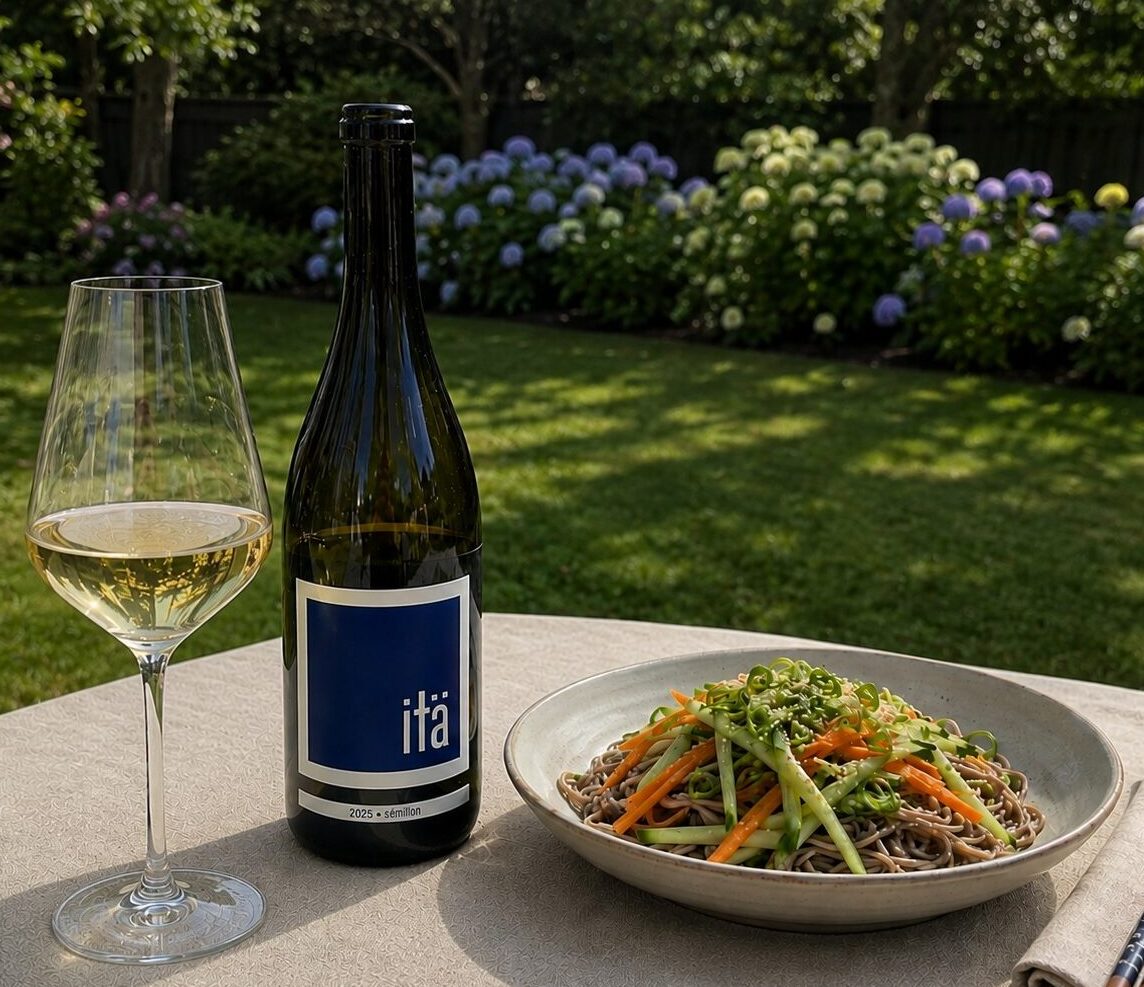
2025 Whites & Rosé are all bottled up!

Last Wednesday we bottled our 2025 white and rosé wines – rosé of primitivo, sémillon, and chardonnay. Now we wait patiently as they settle and mature for release later this spring. It’s always such a relief once a bottling is over… even more so for the whites and rosé, as these delicate wines require special care. Ready to get nerdy with us? Here’s how we prepare these graceful wines for bottling:
- Racking – we gently pump the wines from their aging vessels, leaving solids behind. Different materials are used for different styles of wine: stainless for our rosé, concrete & stainless for the sémillon, and neutral French oak barrels for the chardonnay.
- Cold stabilization – we then chill the wine to 34F, causing naturally-occurring potassium and tartaric acid crystals to form and settle at the bottom of the tank. Without this step, crunchy crystals will form and float to the bottom of the if left in the fridge for too long.
- Heat stability testing – some wines contain proteins that behave like egg whites: clear when cool, and opaque when exposed to heat. If a wine has high protein levels, it creates an unappetizing haze in the bottle if exposed to heat (aka you visit Walla Walla the summer and leave wine in your trunk!). We test every wine to determine if this might be a problem.
- Fun fact – heat and cold stability are mainly problems for white and rosé wines. The tannins in red wines prevent tartrate crystals and protein hazes from forming.
- Bentonite fining to remove proteins – For wines with protein instability, we add a small amount of bentonite clay, which binds to unstable proteins then settles out of the wine. The bentonite clay that we use is food-grade, vegan, and approved for use in organic winemaking. Both the rosé and the sémillon had unstable proteins this year, but the chardonnay did not require any addition.
- Final racking and filtration – we then rack the wines off of solids that have settled out and then gently filter for visual clarity. For wines with any residual sugar or malic acid, sterile filtration is required to prevent any re-fermentation in bottle.
- Bottling! – Finally, we bottle, cork and label the wines on a mobile bottling truck and then hand-pack them into cases and pallets to await their journey to your dinner table 🙂
The 2025 rosé and sémillon will be allocated to our wine club members this March, and remaining stock of these limited wines will be released in April.
Can’t wait? Pick up some of our current releases now.