Carbonic Maceration: The Strange Science Behind Our Washington Zinfandel
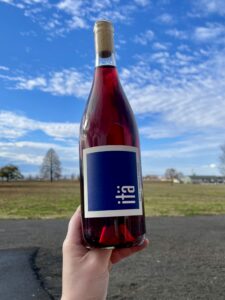
If you’ve ever opened a bottle of our carbonic zinfandel and thought, “this doesn’t taste like any zinfandel I’ve had before” — you’re right, and that’s exactly the point. It doesn’t taste like most Washington reds either. It’s bright, juicy, low in alcohol, and is a perfect chillable red for summer afternoons by the river, lake, or beach — or on your porch, balcony, or fire escape. A lot of that is due to carbonic maceration, a technique that is as fascinating as it is surprising.
What is Carbonic Maceration?
Carbonic maceration is a winemaking technique that originated in Beaujolais, France, where it has been used for centuries to make wines that are light, fruity, and meant to be drunk young. The most famous example is Beaujolais Nouveau, released every year on the third Thursday of November — a tradition our Carbonic Zinfandel follows as a cheeky homage to that style.
The basic idea is this: instead of crushing the grapes and letting yeast consume the sugars in the juice, you place whole, intact grape clusters into a sealed vessel and introduce carbon dioxide. Without oxygen and under CO₂, the grapes begin an enzymatic fermentation process from the inside out — enzymes within the berry itself convert sugars to alcohol, all while the grape remains whole and intact. It’s a completely different biochemical pathway than conventional winemaking, and it produces a wine with dramatically different chemistry, texture, and aroma than you’d get from the same grapes handled in the usual way. You can read more about the science of it here.
How I Actually Do It at itä (It’s Pretty Low-Fi)
Here’s where it gets fun.
I ferment our carbonic zin in what are called Macro 48 bins — large plastic containers with lids that I further seal with pallet wrap to create an anaerobic environment. There is no fancy equipment involved. It looks a little like a science fair project.
Before I even load the zinfandel, I put two five-gallon buckets of already-fermenting syrah into the bottom of each bin. This is called a cross-pitch, and for the 2025 vintage I used syrah that was already a few days into fermentation and alive with yeast.
This does two things simultaneously. The fermenting syrah produces CO₂ naturally inside the sealed bin, which helps establish the anaerobic environment that carbonic maceration requires. It also inoculates the must — meaning it introduces active yeast to the crushed juice that collects at the bottom of the bin. Zinfandel has big, juicy berries with thin skins, and no matter how carefully you load whole clusters, some grapes will always break under their own weight. The yeast from the syrah cross-pitch gets a conventional fermentation going for that crushed fruit at the bottom, while the intact berries above undergo carbonic maceration.
After five days of whole cluster fermentation, I press everything off the skins and stems, and the wine finishes both primary fermentation and malolactic fermentation in neutral French oak barrels before going into bottle in time for our November release.
Why Picking Early Is Non-Negotiable
One of the things I’m most deliberate about with this wine is picking early, and for carbonic maceration it’s not just a stylistic preference — it’s chemistry.
Carbonic maceration increases the pH and decreases the acidity of the wine. That’s simply what the process does to the grape’s chemistry. The presence of stems during fermentation compounds this effect, since stems contain high levels of potassium, which binds to tartaric acid in the wine and causes it to precipitate out of the finished wine. If the fruit is already low in acidity when it comes off the vine, the resulting wine can end up flat and one-dimensional. By picking early, I’m starting with grapes that have higher natural acidity, which gives the wine somewhere to go even after carbonic maceration and the stems do their work.
If I pick too late, there is no recovering it.
What Carbonic Maceration Does to the Wine
The chemistry changes are real and measurable, and they show up in ways you can taste and smell.
Tannins: Carbonic maceration softens and transforms the tannins, making the wine feel rounder and more juicy in your mouth than you would expect from zinfandel, which can be a pretty grippy grape. The result is something you can drink right after release without needing to wait years for it to open up.
Acidity: The process decreases acidity somewhat, which is part of why picking early matters so much. The finished wine has good vibrance and energy, without being sharp.
Aroma: For a lot of wine lovers, this is the most recognizable hallmark of carbonic maceration — it’s the first thing many people learn about the technique. The process produces a distinct set of aromatic compounds that you simply don’t get from conventional fermentation. Our carbonic zin has a nose that is fragrant and red-fruited, with notes of pomegranate, raspberry, and a bit of raspberry leaf herbaceousness. There’s also something almost candy-like about it — I always think of Swedish fish when I smell it coming off the tank.
The Part I Can’t Fully Control
Here’s something I love about making this wine: I never know exactly what the finished alcohol will be until fermentation is complete.
Because the grapes spend five days fermenting as whole clusters before I press them, a significant portion of the sugar-to-alcohol conversion happens through enzymatic activity inside the berry itself, in a way that’s harder to predict than conventional winemaking. By the time I press and the wine finishes out in barrel, the alcohol has landed somewhere — but I’m figuring that out at the end, not the beginning. I think of it as building an airplane and trying to land it at the same time.
Why Zinfandel?
Beaujolais uses Gamay. I use Zinfandel. They’re completely different grapes, but the big, juicy berries and thin skins of Walla Walla Zinfandel make it a good candidate for this process, and it takes the technique somewhere entirely its own. Northwest Wine Report gave the 2025 vintage 92 points and called it “aromatically fragrant, with notes of freshly chopped herb, green flower, and crunchy red fruit,” with a palate that is “light, bright, fruit and acid-filled” and a finish of cranberry tart. For those who like their wines low alcohol, high acid, and gluggable — this is the one.
It’s one of my favorite wines to make, and one of my favorite wines to open on a summer afternoon. If you haven’t tried it yet, it’s available in our shop now.